By Daniel Bampoe
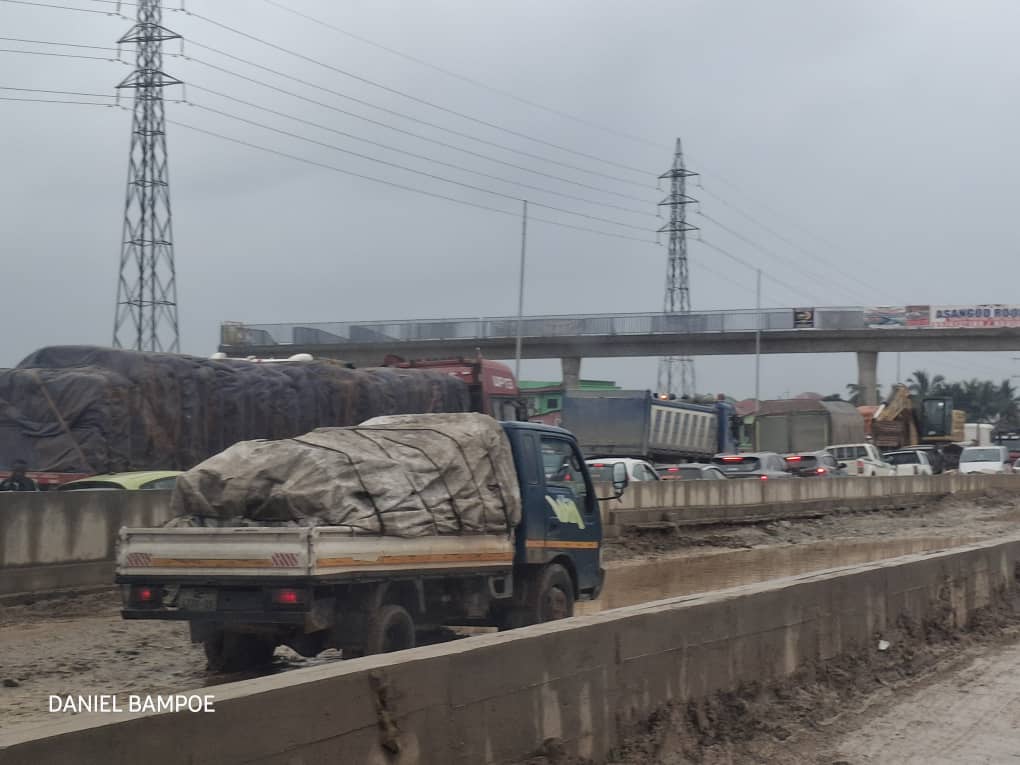
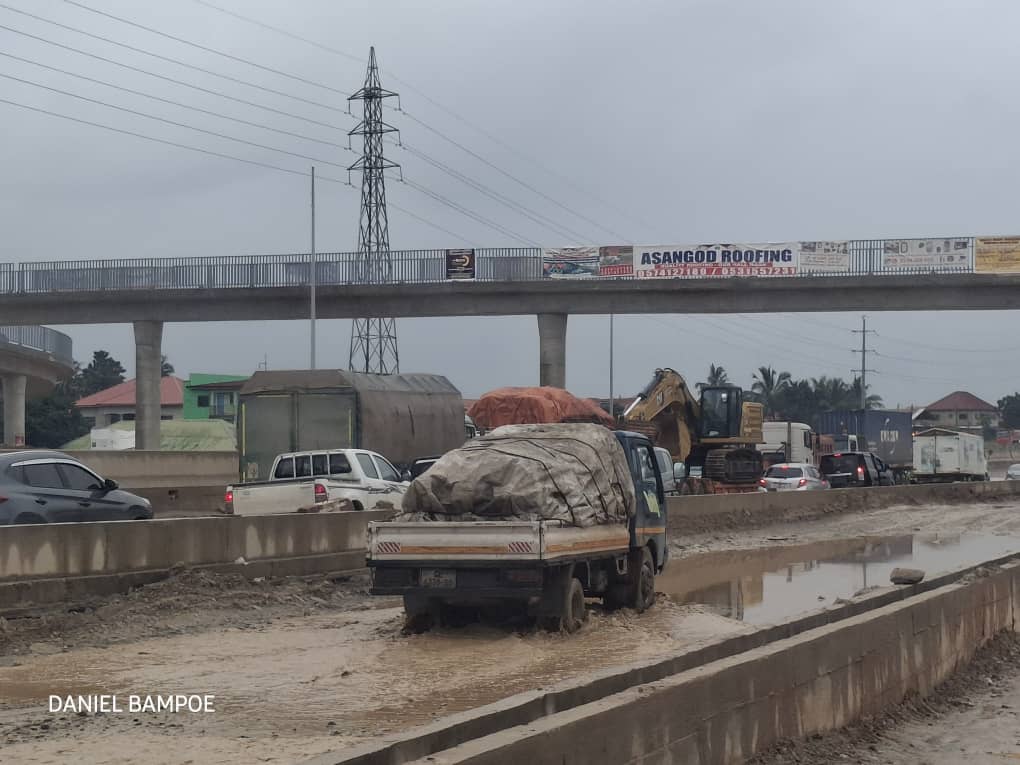
The Ofankor–Nsawam stretch of the Accra–Kumasi highway, once a busy 30-minute link between the capital and Nsawam, has become a nightmare for commuters, with journey times now stretching to over two hours.
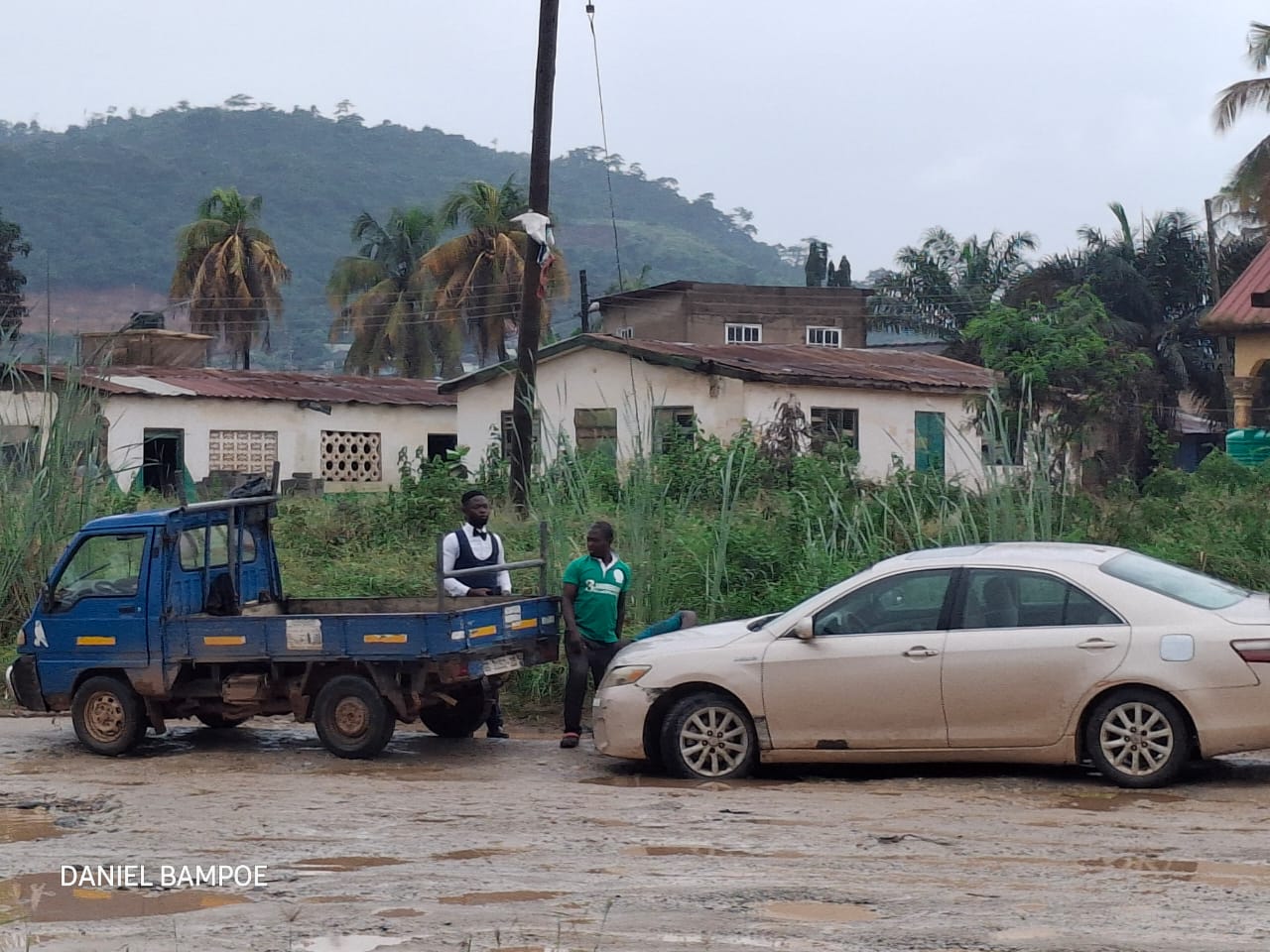
The Residents along the stretch and transport operators say the road has been left to deteriorate since the current administration took office, forcing them to endure potholes the size of craters, waterlogged sections, and daily vehicle breakdowns.
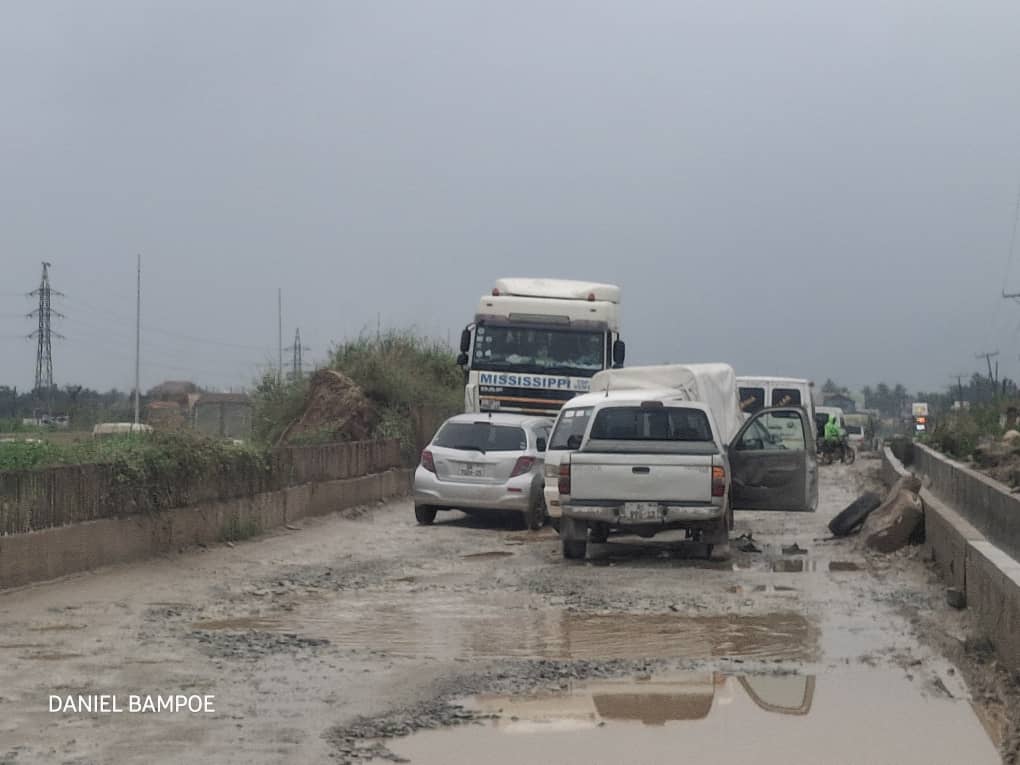
On Tuesday, after a torrential downpour, parts of the road turned into what drivers described as a “swimming pool,” trapping heavy-duty trucks and rendering some sections impassable. Smaller vehicles struggled to navigate the potholes, while some cars were abandoned after developing faults.
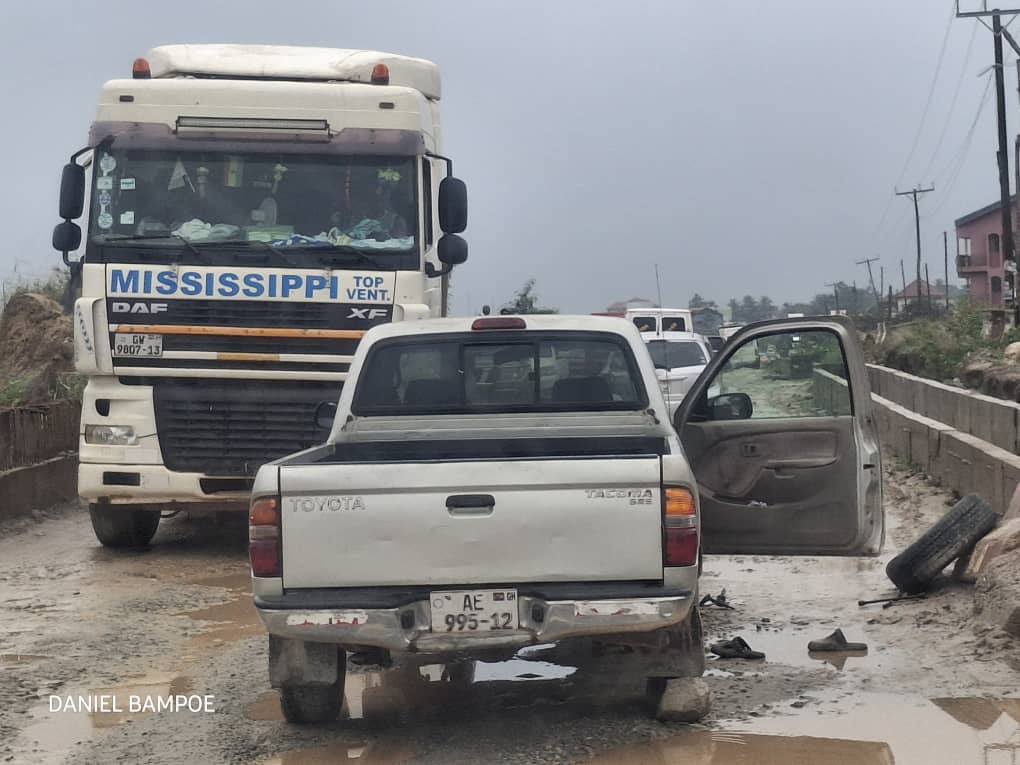
Several drivers say they now replace spare parts almost weekly due to the road’s condition.
In recent weeks, frustrated residents have staged demonstrations, calling on the government to take urgent action. “We can’t continue to suffer like this while new projects are announced,” one protester told reporters.
Government Focus Shifts to New Expressway
The public anger comes at a time when the government has announced an ambitious plan to construct a brand-new six-lane Accra–Kumasi Expressway.
According to Roads and Highways Minister Governs Kwame Agbodza, this will not be an upgrade of the existing N6 highway but an entirely new road built to modern expressway standards.
Speaking at the Government Accountability Series in Accra on July 30, 2025, Agbodza explained that the new expressway would feature limited access points, higher speed limits, and enhanced safety infrastructure to cut travel times and reduce accidents.
“This is Ghana’s first purpose-built expressway,” he said, adding that consultants were being procured to undertake detailed studies, designs, and costings.
The minister insisted that the Ofankor–Nsawam stretch—which started under a previous NPP government but stalled due to funding delays—would see some work resume following recent payments to contractors.
However, commuters remain sceptical, arguing that visible progress is yet to materialise.
Budget Promises and Past Abandonment
In the 2025 Mid-Year Budget Review, Finance Minister Dr Cassiel Ato Forson allocated GH¢13.8 billion for the government’s “Big Push” infrastructure programme, which includes the rehabilitation of the Ofankor–Nsawam dual carriageway.
He also revealed that the government had selected abandoned road projects, ignored by the previous administration, for completion.
However, residents recall that similar promises have been made before, only for the project to stall.
The Ofankor–Nsawam rehabilitation was initially launched as part of a broader upgrade of the N6 route, but successive delays, debt servicing constraints, and funding bottlenecks left the project half-completed.
Dr Forson also confirmed that feasibility studies for the new Accra–Kumasi Expressway were underway alongside other major transport projects, such as the Accra and Kumasi Outer Ring Roads.
The government intends to fund the works through a mix of the AfreximBank facility and allocations from the national budget, with no immediate plans for public-private partnerships due to Ghana’s IMF programme constraints.
Impact on Daily Life and Economy
The deterioration of the Ofankor–Nsawam stretch has had both social and economic consequences. Drivers report skyrocketing vehicle maintenance costs, traders lose hours in traffic, and transport fares have risen sharply.
The road’s condition also poses a safety risk, especially at night, with poor lighting and deep potholes increasing the risk of accidents.
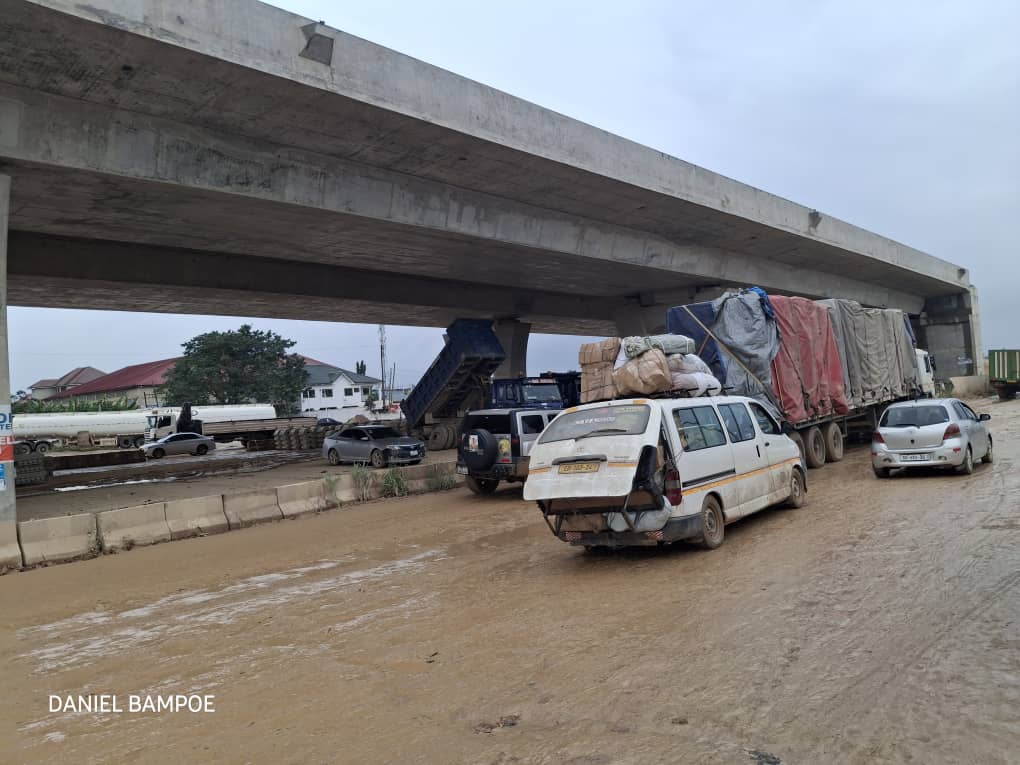
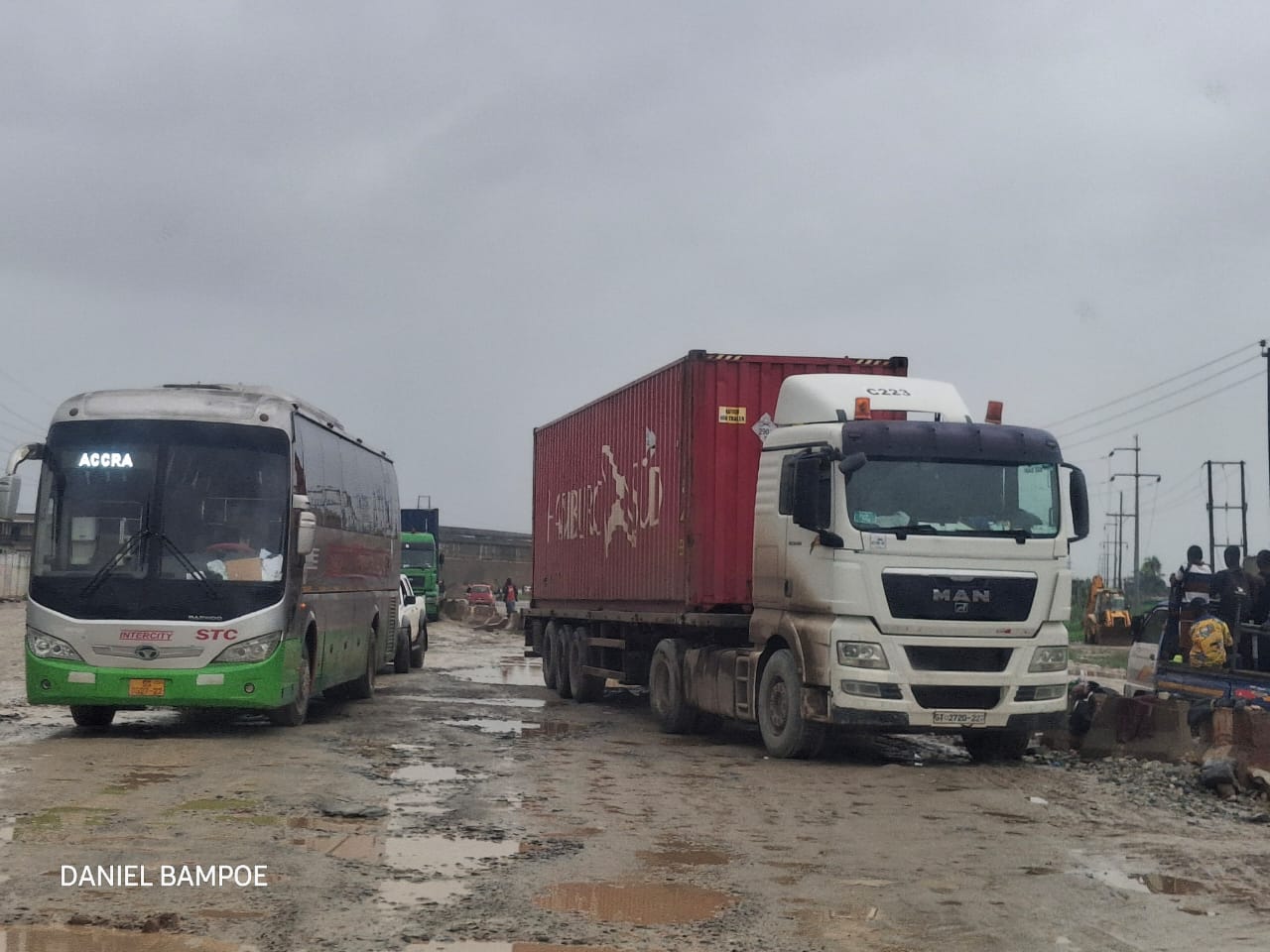
Transport unions warn that without urgent intervention, the situation could worsen with the approaching rainy season.
“The expressway is a good idea, but what about the road we use every day?” one driver asked. “We can’t wait for a new road in the future while this one kills our businesses now.”