BY Daniel Bampoe
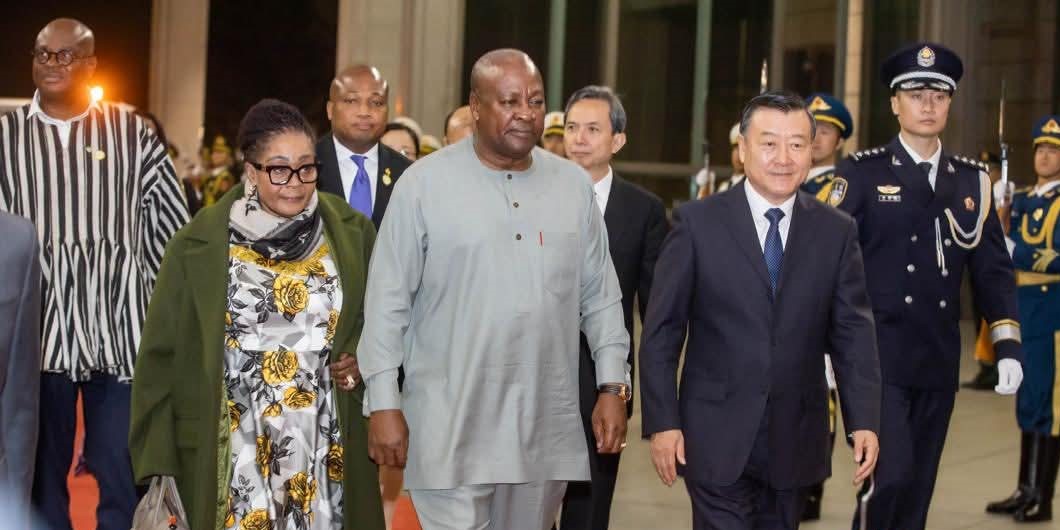
President John Dramani Mahama and First Lady Lordina Mahama on Saturday arrived in Beijing, China, on an official visit at the invitation of Chinese President Xi Jinping.
The trip marks a renewed phase of cooperation between Ghana and China, as both countries prepare to sign a series of strategic agreements aimed at deepening bilateral and economic relations.
The visit coincides with two key milestones — the 65th anniversary of formal Ghana-China diplomatic relations and the 30th anniversary of the Beijing Gender Summit.
These twin celebrations highlight the shared commitment of both nations to mutual development, gender equality, and South-South cooperation.
In a brief statement, President Mahama expressed optimism that Ghana-China relations would “grow in leaps and bounds” through high-level engagements and new agreements scheduled over the coming days.
The visit is expected to focus on infrastructure development, trade, renewable energy, and human capital investment — sectors that have traditionally anchored China’s partnership with Ghana since the establishment of diplomatic ties in 1960.
The relations with China have historically played a crucial role in national development. Under the first President, Dr. Kwame Nkrumah, China supported Ghana in major projects such as the construction of the Bui Dam feasibility studies and several public infrastructure initiatives. In recent decades, the relationship has expanded to include technology transfer, education, and industrial development.
President Mahama’s current visit is therefore seen as a reaffirmation of this enduring friendship and a signal of the desire to leverage global partnerships for economic transformation.
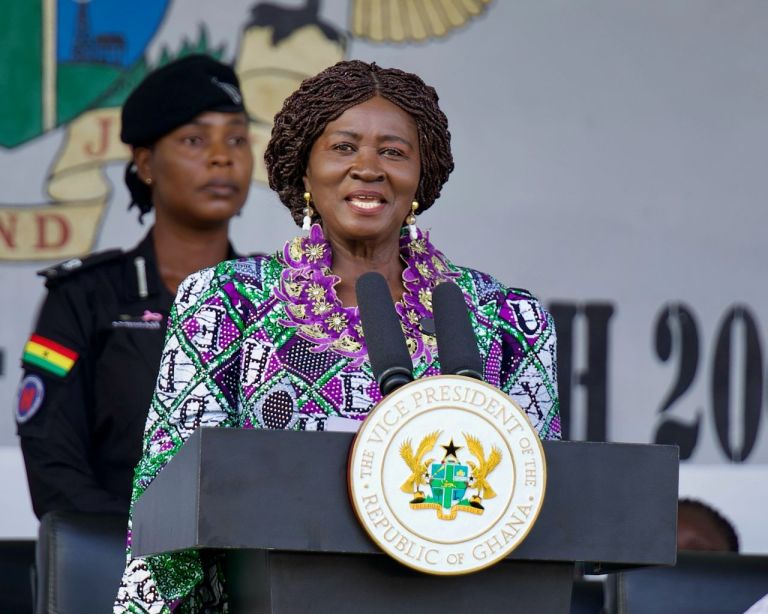
While the President leads Ghana’s mission in Asia, Vice President Prof. Jane Naana Opoku-Agyemang is representing the country in Brussels, Belgium, where she met with members of the Ghanaian community, including chiefs, elders, youth leaders, and representatives of the Ghana Council.
The engagement formed part of her broader European visit aimed at strengthening diaspora relations and advancing the development agenda through collaboration with citizens abroad.
Addressing the gathering, Prof. Opoku-Agyemang expressed gratitude for the diaspora’s continued contribution to national growth through remittances, skills transfer, and advocacy.
She encouraged Ghanaians in Belgium to remain connected to their roots and assured them that government remains committed to policies that yield tangible benefits for communities back home.
Several pressing issues were discussed during the meeting, including food safety, youth discipline, labor migration, and illegal mining (galamsey).
On the fight against galamsey, the Vice President reaffirmed government’s resolve to protect the environment and natural resources.
“Ghana has mined for generations,” she noted, “but we have never witnessed such environmental degradation until recent years.”
She emphasized that government has imposed new restrictions on mining in forest reserves and water bodies and is working to restore affected ecosystems.
On food safety, she disclosed that the administration is collaborating with researchers to promote soil testing and sustainable agricultural practices to ensure healthier food production.
Addressing the concerns of youth discipline and migration, Prof. Opoku-Agyemang urged parents not to depict Ghana as a place to escape from but as a homeland to contribute to. She also encouraged the youth to focus on long-term goals, emphasizing that “every action has consequences.”
Touching on labor export, the Vice President noted that while Ghanaian professionals working abroad reflect the country’s quality of training, their welfare and dignity must be safeguarded.